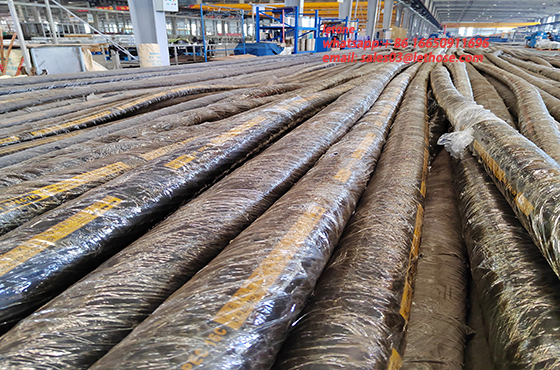
When the drill bit pushes 8,000 meters or deeper into the Earth, engineers face far more than rock—they confront a triple threat of high temperature, high pressure, and highly toxic hydrogen sulfide (H₂S). In the Chuanxi Gas Field on the western margin of the Sichuan Basin and the ultra-deep wells of the Tarim Basin in Xinjiang, H₂S content remains persistently high. The annual failure rate of drilling tools in service reaches 12%, with a single accident costing over ten million yuan. Under such brutal conditions, the hose connecting the standpipe to the mud pump becomes the "lifeline artery" of the entire drilling system.

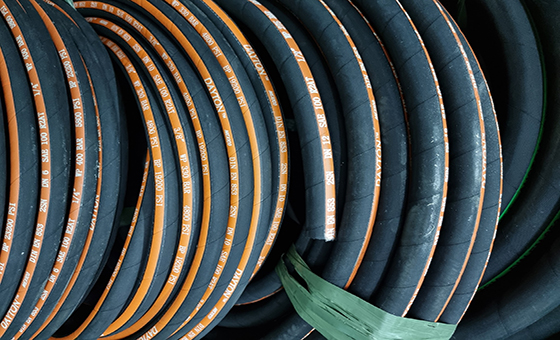
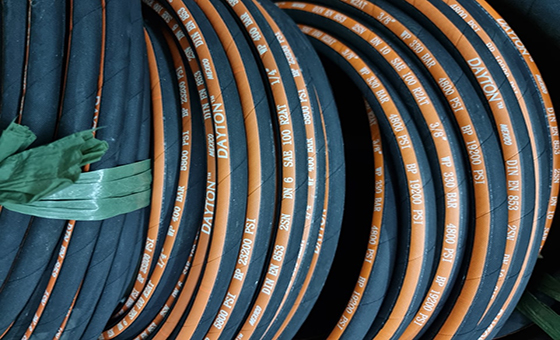
Ordinary rubber hoses are no match for the extreme pressures of deepwell environments. The API 7K Rotary Mud Hose was born precisely for this ultimate battle.
The API 7K hose series is classified into five pressure grades (A through E), with Grade E delivering a working pressure of 7500psi (approximately 52MPa), a test pressure of 11,250psi, and a minimum burst pressure of an astonishing 18,750psi. Taking the 3-inch (77mm ID) size as an example, its burst pressure is 2.5 times the working pressure, with a minimum bend radius of just 900mm and a weight of approximately 8.5kg/m—maintaining lightweight design while enduring such extreme pressures.
What do these numbers mean? They mean that under the enormous water pressure of deep-sea drilling or the sudden formation pressure changes in shallow-sea drilling, this hose will not rupture, will not leak, and the mud pumping system will operate stably at all times. Industry data shows this series is 25% lighter than conventional wound hoses—lighter weight directly improves fuel economy, reduces transportation costs, and makes on-site operations more convenient.
Where does the 7500psi burst capability come from? The answer lies in the hose's "skeleton."
API 7K Grade E rotary mud hoses use 2–6 layers of wound high-strength super-flexible steel wire or wire rope as reinforcement. For the 7500psi top-tier pressure rating, a four-layer spiral steel wire configuration is typically employed. Each wire layer is wound at a precisely calculated spiral angle, with layers interlocking and distributing load evenly, decomposing the enormous internal mud pressure layer by layer and transferring it gradually to the outer rubber cover.
This "four-layer spiral" design delivers two core advantages:
In sour (H₂S-containing) environments, corrosion is the greatest invisible killer. Hydrogen sulfide causes sulfide stress cracking (SSC) in metals, making drilling tools brittle and prone to sudden fracture far below their yield strength. The API 7K rotary mud hose combats this threat with a triple anti-corrosion system:
Layer 1 — Inner Liner Material. The inner rubber layer can be made from HNBR (Hydrogenated Nitrile Butadiene Rubber) or UPE (Ultra-High Molecular Weight Polyethylene), both of which offer excellent resistance to H₂S, CO₂, and other acidic gases, isolating corrosive media from the steel wire reinforcement at the source.
Layer 2 — Steel Wire Protection. The four layers of high-strength super-flexible steel wire undergo special surface treatment and are fully encapsulated by the outer synthetic rubber, effectively blocking H₂S molecules from penetrating to the wire layer. Research shows that when drilling fluid pH is maintained above 9.5, sulfide stress cracking can be effectively inhibited—and a qualified API 7K hose is the key component maintaining this chemical barrier.
Layer 3 — Outer Cover Shield. The outer layer uses wear-resistant, weather-resistant synthetic rubber that maintains stable performance across a wide temperature range of −20°C to +121°C, enduring long-term abrasion from solid particles in the mud, with a service life far exceeding that of ordinary rubber hoses.
Additionally, the hose features a full-bore (equal-diameter) design—the inner diameter at the fitting end is not compressed, reducing turbulence during fluid flow, lowering resistance, and avoiding inner-layer friction damage, further extending service life from a fluid dynamics perspective.
This hose is far from a laboratory concept. It has been deployed as a core flexible connector in CNOOC's Lufeng Oilfield Group area development projects (LF14-4DPP & LF15-1DPP module rigs), Liuhua 11-1 module rig, Enping 15-1 CEP / 20-4 DPP project, as well as Haitao Oilfield's Xijiang 30-2 and Huizhou 26-6 projects—operating between the top of the standpipe and the top drive, and between the pump and the bottom of the standpipe, enduring continuous high-pressure mud pumping.
Notably, it also provides vibration dampening. Inevitable vibrations and shocks during rotary drilling are effectively absorbed and dispersed by the four-layer spiral steel wire structure, acting as a high-efficiency shock absorber that protects both the hose and connected equipment—especially critical on deep-sea drilling platforms, where any pipeline failure caused by vibration could lead to catastrophic consequences.
| Parameter | 2" | 2½" | 3" | 3½" | 4" | 5" | 6" |
|---|---|---|---|---|---|---|---|
| ID (mm) | 51 | 63 | 77 | 89 | 102 | 127 | 152 |
| Working Pressure (psi) | 7500 | 7500 | 7500 | 7500 | 7500 | 7500 | 7500 |
| Burst Pressure (psi) | 18750 | 18750 | 18750 | 18750 | 18750 | 18750 | 18750 |
| Min. Bend Radius (mm) | 600 | 700 | 900 | 1000 | 1200 | 1400 | 1600 |
| Weight (kg/m) | 5.0 | 6.5 | 8.5 | 10.5 | 15.0 | 24.0 | 35.0 |
Standards: API Spec. 7K FSL1 / FSL2 | ABS | Fittings: Integral Union or Integral Flange | Custom full-bore liner available.