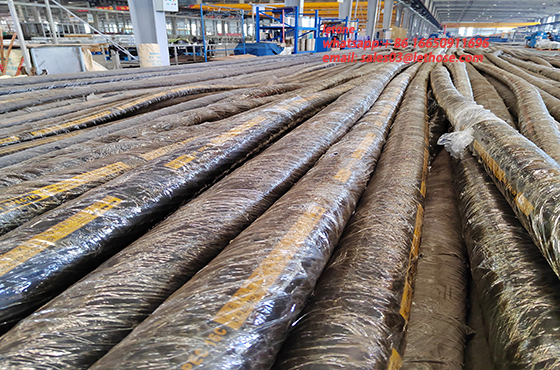
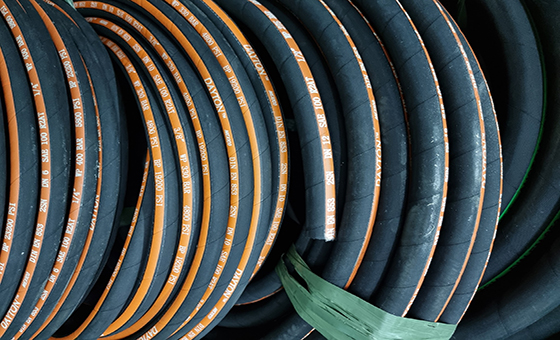
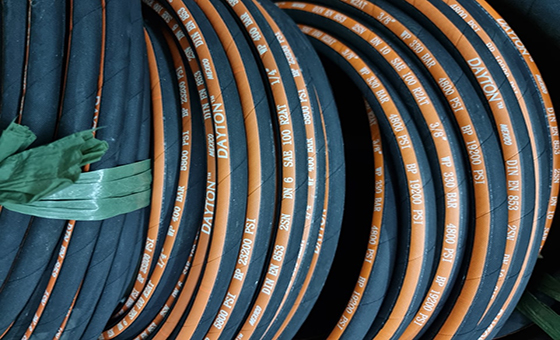
In the production processes of industries such as chemicals, petroleum, food, and pharmaceuticals, the safe and efficient transportation of corrosive fluids has always been a significant challenge. PTFE rubber hoses resistant to acids and alkalis have become an indispensable key component in these fields due to their unique performance advantages, providing reliable protection for fluid transportation under various complex working conditions.

PTFE rubber hoses resistant to acids and alkalis are generally composed of three parts: an inner rubber layer, a reinforcing layer, and an outer rubber layer. Each layer is meticulously designed and selected for materials to ensure the overall optimal performance of the hose.
Inner Rubber Layer: Made of PTFE (polytetrafluoroethylene) and EPDM (ethylene propylene diene monomer) synthetic rubber. PTFE is renowned for its strong chemical inertness, capable of resisting the erosion of various corrosive fluid chemicals, including strong acids, strong alkalis, and strong oxidants. EPDM enhances the flexibility and sealability of the inner rubber layer. The combination of the two makes the inner rubber layer both corrosion-resistant and well-performing.
Reinforcing Layer: Composed of two layers of braided or four layers of wound ultra-high-flexibility steel wires. This design significantly improves the pressure-bearing capacity of the hose, enabling it to operate stably under high-pressure environments while maintaining a certain degree of flexibility for easy installation and bending.
Outer Rubber Layer: Made of black, red, yellow, or blue ozone-resistant, ultraviolet-resistant, and wear-resistant synthetic rubber, with the option of an additional UPE (ultra-high-molecular-weight polyethylene) wear-resistant layer. The outer rubber layer not only protects the internal structure from external environmental damage but also facilitates identification and management in different application scenarios through diverse color choices.
Moreover, PTFE rubber hoses resistant to acids and alkalis have a wide temperature adaptability range, functioning normally from -55°C to 220°C, meeting the requirements for use in high-temperature working environments. Additionally, the hose's size, pressure rating, and color can be customized according to specific requirements, greatly enhancing its applicability and flexibility.
PTFE rubber hoses resistant to acids and alkalis are widely used in multiple fields such as chemicals, petroleum, steel, food, and pharmaceuticals, particularly suitable for the following working conditions:
High-temperature and high-pressure environments: Such as the feed and discharge pipelines of chemical reactors, and the transportation of high-temperature fluids in petroleum refining processes.
Transportation of strongly corrosive fluids: Such as the transportation of corrosive chemicals like sulfuric acid, hydrochloric acid, and sulfides, as well as the transportation of fluids with high hygiene requirements in the food and pharmaceutical industries.
Dynamic bending scenarios: Such as fluid transmission lines in robotic arms and automation equipment, which require the hose to have good flexibility and fatigue resistance.
Although PTFE rubber hoses resistant to acids and alkalis possess numerous excellent properties, the following points still need to be noted during actual use:
Regular Inspection: Regularly inspect the hose for any damage, aging, or looseness/leakage at the connections to ensure the hose is in good condition.
Avoid Excessive Bending: During installation and use, avoid excessive bending or twisting of the hose to prevent damage to the internal structure and affect its service life.
Temperature Control: Although the hose has a wide temperature adaptability range, fluid temperature control is still necessary under extreme temperature conditions to avoid exceeding the hose's tolerance.
Proper Selection: Select the appropriate hose model and specification according to the specific working conditions and requirements to ensure that the hose's pressure, temperature, corrosion resistance, and other properties meet the usage requirements.
Standardized Operation: Follow standardized operating procedures when connecting and disconnecting the hose to avoid damage or leakage caused by rough handling.
In conclusion, PTFE rubber hoses resistant to acids and alkalis play an irreplaceable role in the field of chemical fluid transportation due to their unique properties and wide application scenarios. Through reasonable selection, proper use, and maintenance, their performance advantages can be fully utilized, providing strong guarantees for enterprise production safety and efficiency.