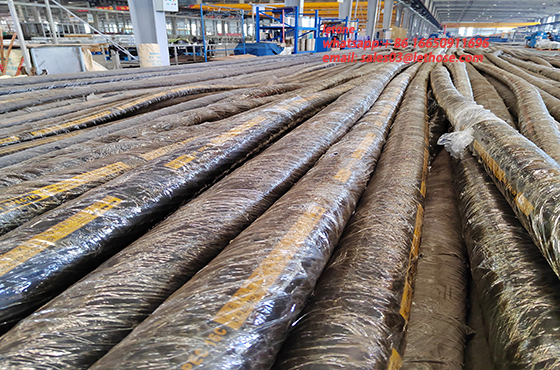
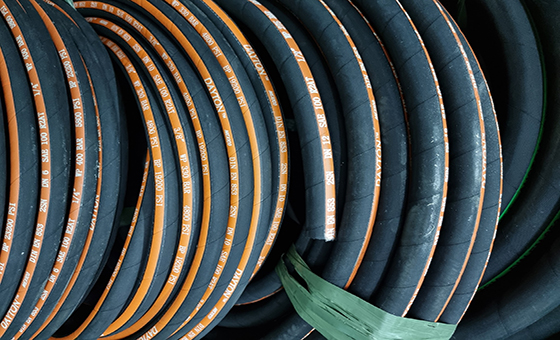
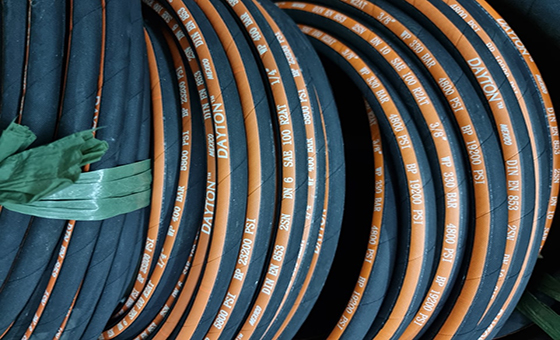
High-pressure hose, as a key component of hydraulic systems, directly impacts the safety and stability of the entire system. In fields such as mine hydraulic supports, oilfield development, and engineering construction, high-pressure tubing plays a crucial role in transporting high-pressure media. With the continuous development of industrial technology, the application range of high-pressure tubing is expanding, and the performance requirements are becoming increasingly stringent.
In mine hydraulic support systems, high-pressure tubing needs to withstand extremely high pressures while adapting to the harsh working environment downhole. These tubings must possess not only excellent pressure resistance but also good corrosion resistance and wear resistance. Due to the confined space downhole, the installation and maintenance of tubing are extremely difficult, thus placing extremely high demands on its reliability. Leaks or ruptures can not only affect production efficiency but also potentially lead to serious safety accidents. Therefore, modern mine hydraulic support systems often employ high-pressure tubing with a multi-layered steel wire winding structure. This structure ensures pressure resistance while providing good flexibility, facilitating installation and layout.

The demand for
high-pressure tubing in oilfield development is equally significant. Different specifications of high-pressure tubing are required in various stages of drilling, well completion, and oil production. Especially in deep-sea oilfield development, high-pressure oil pipes must withstand immense water pressure and the corrosive effects of the complex marine environment. Currently, high-pressure oil pipes used in oilfields are mostly manufactured using special alloy materials, with surfaces treated to improve corrosion resistance. Simultaneously, to meet the needs of deep-sea operations, these pipes must also possess excellent fatigue resistance, capable of withstanding long-term wave impacts and water pressure variations.
In the engineering and construction field, the application of
high-pressure oil hose is mainly concentrated in large-scale engineering machinery. Equipment such as excavators, cranes, and concrete pump trucks require a large number of high-pressure oil pipes. These pipes must not only withstand the severe vibrations during equipment operation but also adapt to various harsh weather conditions. Modern engineering machinery commonly uses electro-hydraulic control systems, which place extremely high demands on the cleanliness of the oil pipes; even the smallest impurities can damage precision valves. Therefore, high-pressure oil pipes for engineering machinery must have strictly controlled cleanliness during manufacturing and employ special dustproof designs.
In lifting and transportation equipment, high-pressure oil pipes are mainly used in hydraulic cranes and container spreaders. These devices have high requirements for the dynamic performance of the oil pipes, needing to withstand frequent bending and torsion. Especially in port operations, equipment needs to operate continuously for 24 hours, requiring oil pipes to possess excellent durability. Currently, high-performance polyurethane materials are widely used for the outer protection of these oil pipes, significantly improving their service life.
High-pressure oil pipes in the metallurgical forging industry face extreme working environments. Under high temperature and pressure conditions, ordinary oil pipes are prone to aging and failure. Therefore, high-pressure oil pipes specifically designed for the metallurgical industry are typically manufactured using special heat-resistant materials and equipped with comprehensive cooling systems. In equipment such as continuous casting machines and rolling mills, high-pressure oil pipes not only transport hydraulic oil but also coolant, placing higher demands on their design.
The working environment of mining equipment is particularly harsh, with high dust levels, strong vibrations, and large temperature differences. High-pressure oil pipes for mining machinery must possess superior wear resistance; many products employ special wear-resistant coating technologies. Furthermore, for ease of maintenance, mining equipment oil pipes often utilize quick-connect couplings, allowing for rapid replacement. In open-pit mines, oil pipes are also exposed to intense ultraviolet radiation, thus requiring the addition of UV-resistant components to the outer layer material.
High-pressure hydraulic hoses in marine hydraulic systems face unique challenges. The high salinity and humidity of the marine environment accelerate metal corrosion, while the limited space on a ship necessitates hoses with small bending radii. Marine high-pressure hoses are typically made of stainless steel or galvanized steel and equipped with robust support and fixing devices to prevent wear caused by ship rolling. On large oil tankers and container ships, hydraulic systems often operate continuously for months, posing a severe test to hose reliability.
High-pressure hydraulic hoses in injection molding machinery need to withstand cyclic pressure shocks. During injection molding, the hydraulic system frequently switches between high and low pressure; this alternating load easily leads to hose fatigue damage. Therefore, high-pressure hoses specifically designed for injection molding machines are specially reinforced with anti-pulse performance and employ special braiding processes to improve their fatigue life. Simultaneously, due to the high temperatures in injection molding workshops, these hoses also require good heat resistance.
While the application environment for high-pressure hydraulic hoses in agricultural machinery is not as harsh as in industrial applications, it still has its own specific requirements. In combine harvesters, tractors, and other equipment, hoses frequently come into contact with crop residues and soil, making them prone to blockage. Therefore, agricultural machinery hydraulic hoses are often equipped with protective sleeves and feature a large inner diameter design to reduce the risk of blockage. Furthermore, considering the seasonal nature of agricultural production, these hoses also need to possess excellent weather resistance and withstand long-term storage.
Machine tool hydraulic systems have the highest precision requirements for high-pressure hydraulic hoses. On precision equipment such as CNC machine tools and machining centers, even minor fluctuations in the hydraulic system can affect machining accuracy. High-pressure hydraulic hoses for machine tools must not only guarantee strict dimensional tolerances but also possess excellent pressure stability. Many high-end machine tools use imported high-pressure hydraulic hoses, which meet extremely high standards in terms of cleanliness and dimensional accuracy.
With the continuous improvement of industrial automation, the trend towards intelligent hydraulic systems is becoming increasingly apparent. Modern high-pressure hydraulic hoses are beginning to integrate various sensors, enabling real-time monitoring of parameters such as pressure and temperature, and transmitting data to the control center via IoT technology. These intelligent hoses significantly improve system maintainability and can provide early warnings of potential failure risks. Simultaneously, the continuous emergence of new materials and processes provides more possibilities for improving the performance of high-pressure hydraulic hoses. Innovative achievements such as carbon fiber reinforced composite materials and nano-coating technology are gradually being applied to the field of high-pressure hydraulic hose manufacturing.
In the future, with increasingly stringent environmental protection requirements, the recyclability and environmental friendliness of high-pressure hydraulic pipes will become important development directions. Green solutions such as biodegradable materials and low-permeability technologies will see wider application. Simultaneously, digital design and intelligent manufacturing technologies will further improve the production efficiency and product consistency of high-pressure hydraulic pipes, providing more reliable and efficient hydraulic transmission solutions for various industrial sectors.