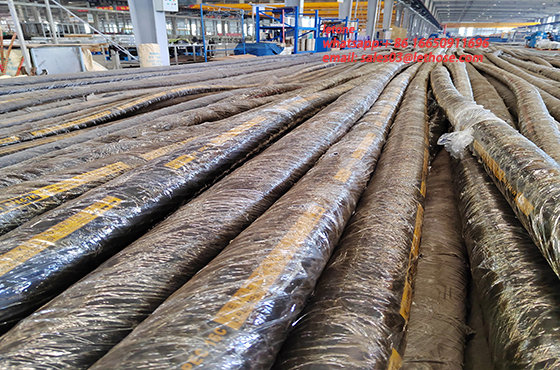
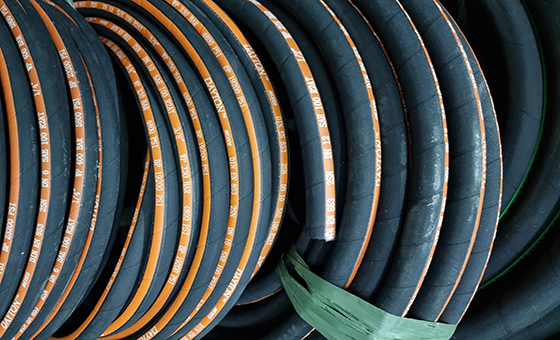
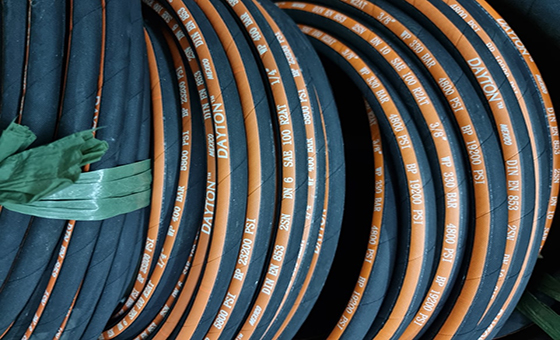
In the pipeline procurement scenarios of construction machinery and general hydraulic systems, the single wire braid high-pressure hydraulic hose is the most widely used basic fluid transmission component. The two most mainstream product systems in the current market — SAE 100R1 and EN853 1SN — often cause confusion for procurement and engineering personnel: they share highly similar appearance and structure, close price ranges, and can even be directly interchanged in many scenarios. However, there are many easily overlooked core differences in their detailed performance, standard compliance and applicable scenarios. Clarifying the distinctions between the two products is a key prerequisite for taking into account project compliance, operational reliability and procurement cost.

SAE 100R1 and EN853 1SN are essentially single wire braid high-pressure hydraulic hoses with the same structure. Their core design foundation is "one layer of high-tensile steel wire braid as the reinforcement layer, paired with oil-resistant rubber inner and outer layers", but they belong to two completely independent industrial standard systems respectively:
It is difficult to directly distinguish the two single wire braid high-pressure hydraulic hoses from their appearance. However, when diving into the detail dimensions of material design and performance parameters, the differentiated designs of the two will directly affect the actual use experience:
Under the same inner diameter specification, the rated working pressure of SAE 100R1 is generally slightly higher than that of EN853 1SN. Taking the commonly used DN19 specification as an example, the rated working pressure of SAE 100R1 can reach 10MPa, while the conventional rated working pressure of EN853 1SN of the same inner diameter is 9MPa. At the same time, the pulse fatigue test requirements of SAE 100R1 are more stringent, and the general industry requirement is that the cycle life must reach more than 200,000 times. In hydraulic systems with long-term high-frequency pressure fluctuations, the long-term operation reliability of the SAE version will be more prominent.
The outer rubber layer of EN853 1SN adopts a thin special synthetic rubber design, which can be directly crimped with joints without stripping the outer rubber, greatly reducing the operation steps of on-site assembly and avoiding the risk of hose outer layer damage caused by improper rubber stripping. The on-site assembly efficiency is more than 30% higher than that of SAE 100R1.
In contrast, the outer rubber layer of SAE 100R1 has a larger thickness, with more excellent wear resistance and ozone aging resistance. In open-air construction sites and operation scenarios with frequent dragging and movement, the service life of the outer rubber layer is 40% longer than that of ordinary EN853 1SN, making it more suitable for harsh outdoor working conditions.
The inner diameter tolerance of SAE 100R1 fully follows the imperial inch system, and all dimension markings and tolerance settings are adapted to the mainstream imperial hydraulic joints in the North American market, no additional transition joints are needed when connecting North American imported hydraulic components. EN853 1SN adopts the metric millimeter tolerance system, which has a higher matching degree with mainstream EU and domestic metric hydraulic components, and can be directly connected to standard metric joints in conventional scenarios.