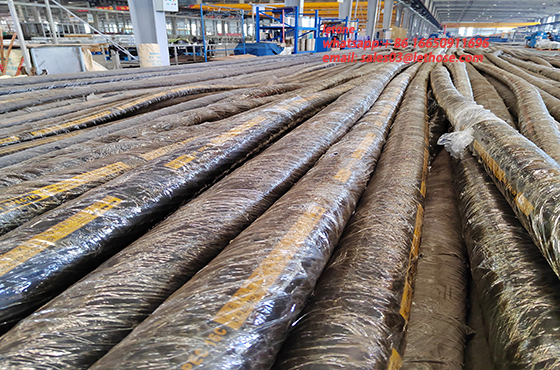
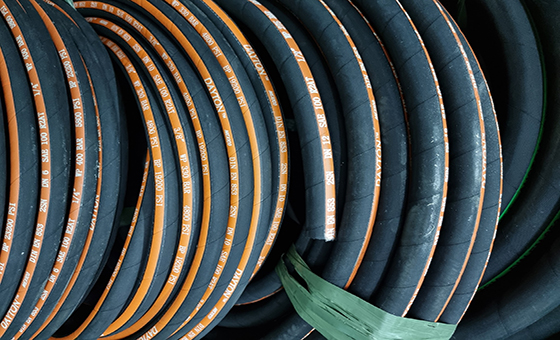
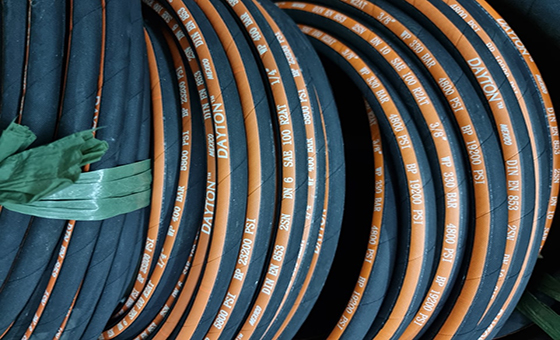
In the field of industrial fluid transmission, high-pressure rubber hoses are critical connecting components, and their performance directly affects system safety and efficiency. The SAE 100 series standards, developed by the Society of Automotive Engineers (SAE), have become the universal technical specifications for the global high-pressure hose industry. This article will delve into the technical content and application scenarios of this standard system.
I. Standard System Architecture and Classification Logic
The
SAE 100 standard uses an alphanumeric coding system, where "R" represents rubber material, and the subsequent numbers 1-19 represent different pressure ratings and structural characteristics. For example, the R1 type uses a two-layer steel wire braided structure, with a working pressure of up to 210 kgf/cm² and a burst pressure of up to 840 kgf/cm², suitable for transmission of petroleum-based hydraulic oil. The R2 type adds an ozone-resistant layer to the R1, making it suitable for harsh outdoor environments.
Particularly noteworthy is the 4SP series, a special standard developed by SAE for ultra-high pressure conditions. The 4SP type hose uses a four-layer steel wire winding process, which improves pulse life by 300% compared to traditional braided structures, and can reach a maximum working pressure of 540 bar. Baidu Baike indicates that these types of pipes are typically equipped with 37° tapered pipe thread fittings (GB/T7306.2 standard) to ensure high-pressure sealing reliability.
II. Comparative Analysis of Core Performance Indicators
Comparing the technical parameters of R1 to R19 reveals a clear technological evolution path within this standard system:
1. Reinforcing Layer Design: From 4 layers of braiding in R1 to 6 layers of winding in R19, the wire diameter increased from 0.3mm to 0.8mm.
2. Temperature Range: Basic types (R1-R5) are suitable for -40℃ to +100℃, while high-temperature types (R12-R15) can reach 120℃.
3. Bending Radius: For the same diameter, R7 is 25% smaller than R1, making it more suitable for installation in confined spaces.
A technical document for a certain type of oil-resistant synthetic rubber steel wire hose shows that its R1 model has a burst pressure of 4 times the working pressure at 23℃, meeting the requirements of SAE J517-2014 standard. The R13 type, with the addition of a fluororubber layer, can withstand corrosion from phosphate ester hydraulic oil.
III. Materials Technology and Process Innovation
1. Inner Liner: A polyurethane/nitrile rubber blend improves wear resistance; laboratory data shows a 42% reduction in wear rate.
2. Reinforcing Layer: High-carbon steel wire with a tensile strength of 2200MPa, combined with a new braiding angle algorithm to improve fatigue life.
3. Outer Layer: A composite coating with added Kevlar fibers improves impact resistance by 3 times.
The Zhihu column "Evolution of Hydraulic Hose Technology" points out that the R10 type uses a 45° staggered braiding process, enabling pulse cycles exceeding 500,000, far exceeding the ISO 6803 standard requirements. The pre-stressed winding technology used in the 4SP series further achieves a 15% reduction in hose weight while increasing pressure resistance by 20%.
IV. Typical Application Scenarios Analysis
1. Construction Machinery: R4 type is widely used in excavator main pump pipelines, with pulse performance meeting 500,000 cycles of testing.
2. Oilfield Equipment: R8 type's H2S resistance meets API 16C standards and is used in blowout preventer control pipelines.
3. Marine Systems: R15 type is DNV certified and can withstand extreme temperature differences from -54℃ to +150℃.
4. Aerospace: The 4SP derivative model has a working pressure of up to 1000 bar, meeting the requirements of landing gear actuation systems.
According to LETONE Technology's experimental data, its R5 type product achieves an average service life extension of 8000 hours in port crane applications, a 60% improvement over traditional products. This is attributed to the new bonding system, which achieves a rubber-steel wire bonding strength of 15 N/mm.
V. Quality Control and Testing Standards
The SAE standard system includes stringent testing specifications: 1. Pulse Test: ISO 6803 standard requires a minimum of 150,000 pulses (R1 type) 2. Burst Pressure: Must reach 4 times the rated working pressure 3. Low-Temperature Bending: Bending 180° around the mandrel at -40℃ without cracking 4. Fluid Resistance Test: Volume change rate ≤50% after immersion in IRM903 oil for 70 hours
It is worth noting that LETONE Technology's 4SP type hose has an actual pulse life of up to 800,000 pulses, far exceeding the basic standard. The SAE standard-compliant testing procedures include 17 specific testing items to ensure reliability throughout its entire lifecycle.
VI. Selection Guide and Maintenance Points
1. Pressure Matching: Working pressure ≤ 75% of rated value, peak pressure ≤ 100%
2. Media Compatibility: Ester oils require R12 or higher grade.
3. Installation Specifications: Minimum bending radius ≥ 6 times the pipe diameter.
4. Life Management: Recommended replacement every 2000 working hours or 2 years.
Practice shows that in coal mine hydraulic support systems, using R3 type hoses with regular acid washing maintenance can reduce the failure rate by 75%. Furthermore, when used in injection molding machines with rotary joints, 4SP type hoses can extend their lifespan by 30%.
With advancements in materials science, the SAE standard system continues to evolve. The latest draft shows that the R20 type, currently under development, will adopt a graphene reinforcement layer, theoretically achieving twice the pressure resistance of existing products. This indicates that high-pressure fluid transmission technology is about to enter a new era.