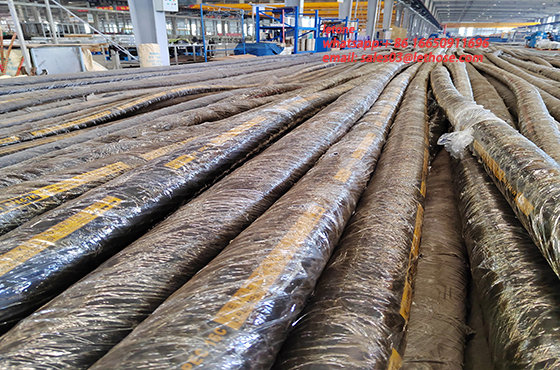
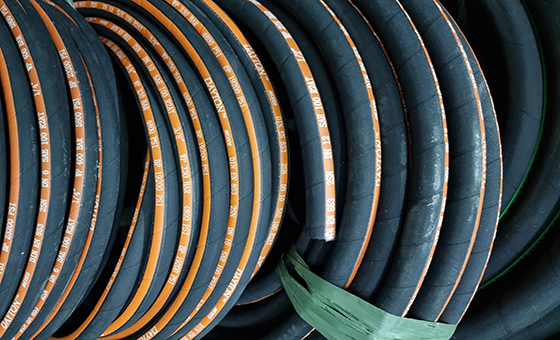
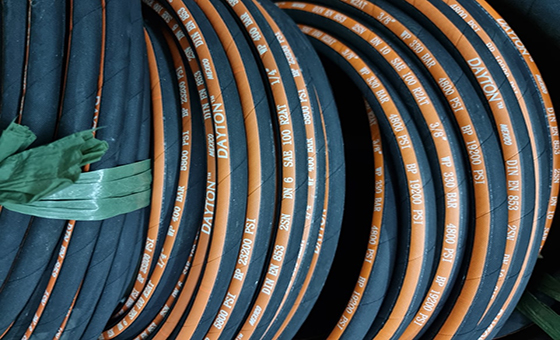
The SAE 100R1 wire braid hydraulic hose is the most widely used classic hose type in medium-pressure hydraulic systems, designed and manufactured in strict accordance with the SAE J517 standard from the Society of Automotive Engineers. It adopts a three-layer composite structure as a whole. The inner layer is made of oil-resistant synthetic rubber, which can stably convey petroleum-based hydraulic oil, water glycol, lubricating oil and other media for a long time, effectively blocking the erosion and damage of fluids to the reinforcement layer.
The middle reinforcement layer is a single-strand high-tensile steel wire cross braided structure, with the braiding angle controlled between 45° and 60°. This chainmail-like mesh structure not only guarantees the basic pressure-bearing capacity, but also endows the hose with excellent flexibility. The outer layer is a weather-resistant and abrasion-resistant synthetic rubber protective layer, which can resist outdoor ultraviolet radiation, mechanical friction and mild chemical corrosion, extending the service life of the hose under complex working conditions.

Standard specifications of the SAE 100R1 wire braid hydraulic hose have a clear pressure grading system. The 1/4 inch bore specification can reach a maximum working pressure of 22.5MPa (3250psi), and the 1 inch bore specification has a working pressure of 8.7MPa (1262psi). All products in the full series meet the 4:1 safety factor requirement, with the burst pressure no less than 4 times the rated working pressure, fully complying with international synchronous standards such as ISO 1436 TYPE 1SN and EN853 TYPE 1SN.
The temperature adaptation range covers -40°C to +100°C. When conveying air media, the maximum temperature resistance is 50°C, and when conveying water-based emulsions, the maximum working temperature does not exceed 80°C. It can stably adapt to the conventional hydraulic working conditions of most construction machinery and agricultural machinery, without early failure problems such as inner rubber layer swelling and outer rubber layer cracking.
With the core advantages of high flexibility and small minimum bend radius, the SAE 100R1 wire braid hydraulic hose has become the preferred product for scenarios with limited piping space. Its minimum bend radius is only 60% of that of the same bore size steel wire spiral hose, which can easily cope with the complex pipeline routing requirements inside construction machinery and greatly reduce the difficulty of pipeline layout.
It is widely adapted to medium-pressure power transmission systems such as loaders, forklifts, forestry equipment and small industrial hydraulic stations, and can be used in non-severe impulse working conditions such as the connection between hydraulic pumps and valve groups, and oil supply circuits of hydraulic cylinders. Compared with the SAE 100R2 hose with double-layer steel wire braid, it is lighter in weight and more convenient to install, and has extremely high cost performance in conventional systems without frequent pressure shocks.
During selection, three core parameters need to be confirmed: bore size, maximum working pressure of the system, and long-term operating ambient temperature, to ensure that the rated pressure of the hose is more than 1.2 times higher than the peak pressure of the system, avoiding fatigue fracture of the steel wire layer caused by long-term overpressure operation. The matching joints should select crimped joints that match the hose standard, to ensure that the steel wire reinforcement layer is completely engaged with the joint sleeve, preventing the joint from pulling out and leaking under pressure impact.
In daily use, avoid the outer surface of the hose being scratched by sharp objects. Forbid forcibly twisting the hose during installation, since a twist exceeding 7° will directly reduce the pressure resistance level by more than 30%. Regularly check the wear and bulging of the outer rubber layer. When local bulges or oil seepage signs appear, replace the hose immediately to avoid equipment shutdown and safety accidents caused by sudden hose burst.