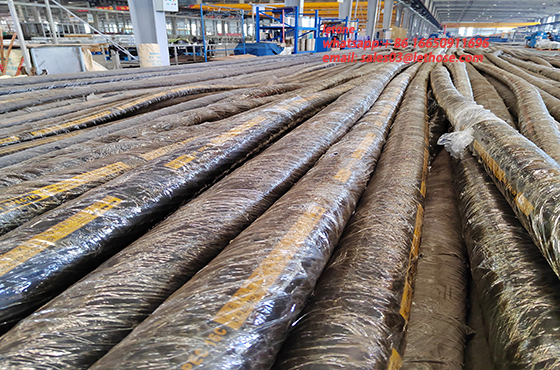
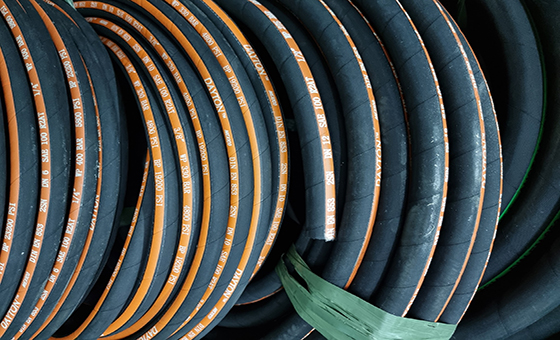
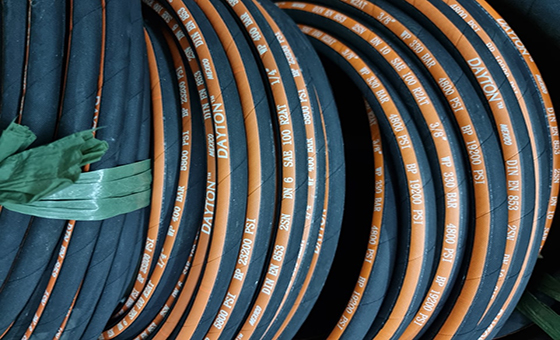
In industrial bulk fluid handling, coastal engineering water supply, temporary oil storage and transportation, and other scenarios, large-diameter conveying pipelines need to cope with complex challenges such as long-term medium erosion, frequent pressure fluctuations, and variable site conditions. The
10-inch flexible hose developed for 20bar working conditions can perfectly meet the dual conveying requirements of seawater and oil. Compared with traditional rigid pipelines, it has stronger on-site adaptability, lower installation difficulty and higher comprehensive safety, and has become a widely recognized high-efficiency conveying solution in the industry.
Layered Composite Structure for Dual Medium Long-Term Adaptation
The
10-inch flexible hose adopts a targeted layered design for the coexistence of seawater and oil working conditions, and each layer of material and process has been strictly verified by professional tests:
The inner rubber layer is made of specially modified nitrile rubber, which can resist the swelling of petroleum products with aromatic content up to 50%, and will not be corroded by salt ions in seawater for a long time, avoiding the hidden danger of medium leakage caused by the failure of the inner layer.
The reinforcement layer is composed of multiple layers of high-tensile synthetic canvas, which is tightly wound and matched with a built-in spiral high-strength steel wire skeleton. Under the rated working pressure of 20bar, the minimum safety factor reaches 4:1, which can withstand instantaneous pressure surges in the pipeline.
The outer rubber layer is made of weather-resistant neoprene material, which has excellent tear resistance, ozone aging resistance and seawater corrosion resistance, and can maintain stable performance after long-term outdoor open-air use.
20bar Working Condition Performance Highlights
Under the standard 20bar rated working pressure, the
10-inch flexible hose has obvious performance advantages over ordinary low-pressure hoses and traditional hard pipes of the same diameter:
The inner diameter is 254mm, which can support a stable conveying flow of more than 300 cubic meters per hour, effectively shortening the operation time of oil tank loading and unloading and large-flow water delivery.
The minimum dynamic bending radius is not more than 1100mm, which can freely pass through complex terrain such as uneven roads and site corners, and will not generate excessive concentrated stress at the bending position.
The overall weight of the hose is only about 26.6kg per meter, which does not need large hoisting equipment during on-site deployment, and can be quickly laid and recovered by a small number of operators.
Key Points for Application in Dual Medium Conveying Scenarios
When the 10-inch flexible hose is used for alternating conveying of seawater and oil, it has a variety of targeted optimization designs to ensure long-term reliable operation:
The built-in continuous anti-static copper wire ensures the electrical continuity of the entire hose, effectively eliminating the electrostatic accumulation risk during oil conveying and meeting the explosion-proof safety standards for flammable medium operation.
The applicable temperature range covers -20°C to +82°C, which can adapt to the temperature changes of different regions and different seasons, and the colloid will not become brittle and crack in low temperature environment.
The overall tightness of the pipe body is excellent, and there is no cross-contamination risk when switching between two media, which will not affect the purity of the conveyed oil and the use effect of industrial seawater.
Selection, Installation and Daily Maintenance Guidelines
To ensure that the
10-inch flexible hose always maintains the best working condition under 20bar pressure, the following specifications should be strictly followed during the use process:
When selecting the model, clearly confirm the three core parameters of 10 inch inner diameter, 20bar working pressure, and seawater and oil dual medium adaptation. It is recommended to prefer the whole hose with a single length of no more than 60 meters, so as to reduce the number of on-site joints and reduce the leakage risk.
During on-site installation, avoid the hose being dragged on sharp gravel and rough ground for a long time, and it is recommended to pad a rubber protective pad at the position where it contacts the ground.
After each batch of operation, use clean water to thoroughly flush the residual medium in the inner cavity of the hose, regularly check the wear of the outer rubber layer and the sealing of the joint, and replace the hose in time when the reinforcement layer is exposed.
This 10-inch flexible hose with 20bar working pressure, relying on its stable dual-medium conveying performance and low-cost deployment advantages, has been widely used in many industrial fluid handling scenarios, and can bring reliable and efficient operation support for users' daily conveying operations.