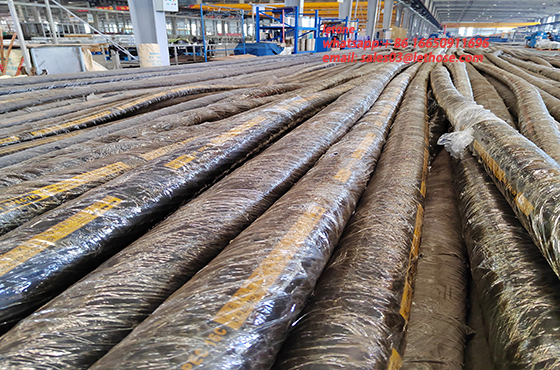
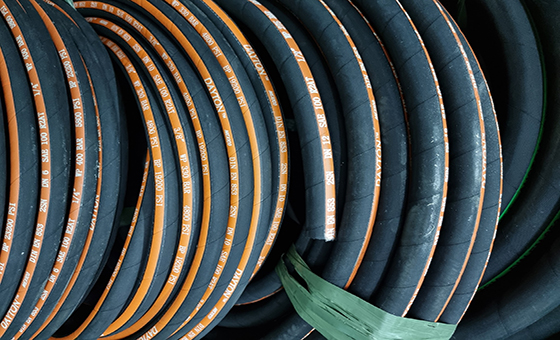
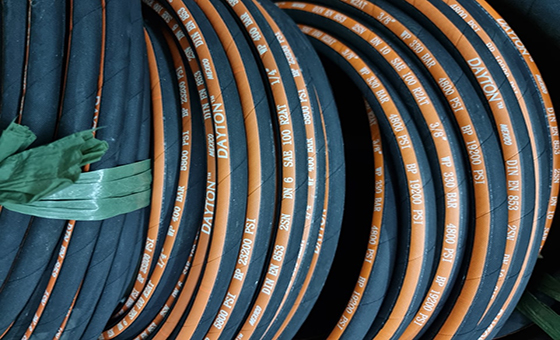
In the field of heavy construction machinery, shield tunneling machines and loaders serve as core equipment for tunnel excavation and material handling, respectively. The stability of their hydraulic systems directly determines construction efficiency and equipment lifespan. As the "blood vessels" of these systems, high-pressure piping must withstand extreme pressure, frequent pulsing, and complex operating conditions. EN856 4SP spiral steel wire-reinforced hydraulic hoses have become the top choice for such applications due to their high-pressure resistance, pulse resistance, and wear resistance. This article provides engineers with a practical guide by examining selection criteria, application scenarios, core advantages, and assembly recommendations for these hoses.
I. Core Selection Criteria: Why Choose EN856 4SP Hoses?
The hydraulic systems of shield tunneling machines and loaders typically operate under pressures as high as 35MPa to 42MPa, requiring long-term performance under high-frequency pulsing, vibration, and bending.
EN856 4SP hoses are ideally suited to these demands:
Four-layer spiral steel wire structure: By optimizing the wire angle and interlayer bonding process, these hoses achieve a burst pressure ≥160MPa, significantly exceeding industry standards and ensuring ample safety margins under extreme conditions.
Superior pulse resistance: These hoses can endure over 1 million pulse cycles at 135% of rated working pressure without leakage, substantially reducing the risk of hose failure due to fatigue damage.
Flex and wear resistance: The outer cover, made of weather-resistant rubber composite, adapts to complex movements such as cutter head rotation in shield machines and loader arm swinging, extending service life.
II. Application Scenarios: Tailored Needs of Shield Machines and Loaders
High-pressure piping for shield tunneling machines
Shield machines drive critical components like cutter heads, thrust cylinders, and screw conveyors during tunneling, requiring piping that can handle tight spaces, multi-angle bending, and sediment erosion.
Recommended solution: Use EN856 4SP hoses with explosion-proof fittings, paired with wear-resistant sleeves to protect the outer cover from vibration-induced abrasion near the cutter head.
Key specifications: Inner diameters from DN10 to DN25 to match varying flow demands; operating temperatures ranging from -40°C to +120°C for complex underground environments.
High-pressure piping for loaders
Loaders require hydraulic systems that frequently drive boom lifting and bucket tilting, with piping subject to dynamic bending and external impacts.
Recommended solution: Employ EN856 4SP hoses with tension-resistant and anti-loosening fittings, focusing protection on connections between the boom and frame to prevent fitting loosening due to vibration.
Core specifications: Inner diameters from DN12 to DN32 for high flow demands; bending radii ≤200mm to fit compact installation spaces.
III. Core Advantages of EN856 4SP Hoses
Safety margin design
The minimum bending radius of EN856 4SP hoses is just 4 times the nominal diameter (e.g., ≤100mm for DN25 hoses), far superior to ordinary hoses, preventing inner liner detachment or wire breakage due to excessive bending.
Compatibility with various hydraulic fluids
The inner liner, made of aging-resistant synthetic rubber, is compatible with mineral oils, biodegradable oils, and water-based hydraulic fluids, reducing corrosion risks from mismatched fluids.
Quick installation and maintenance
These hoses support 24° cone seal fittings, flange connections, and other methods, with pre-assembled fittings significantly reducing on-site installation time and labor costs.
IV. Assembly Recommendations: Key Steps from Requirements to Implementation
Clarify operating parameters
Determine the system’s maximum operating pressure, flow rate, pulse frequency, and ambient temperature.
Assess the piping’s bending path, vibration amplitude, and potential external impact sources (e.g., falling rocks or collisions).
Select appropriate specifications
Refer to the EN856 4SP hose specification table to match models based on inner diameter and working pressure.
Prioritize reputable suppliers (e.g., Letone) to ensure critical indicators like wire layer uniformity and rubber purity meet standards.
Enhance protective measures
Add spring guards or nylon armor in high-wear areas (e.g., near shield machine cutter heads).
Regularly inspect exposed piping and promptly replace hoses showing outer cover aging or exposed steel wires.
Conclusion: Ensuring Efficient Equipment Operation through Professional Selection
Selecting high-pressure piping for shield machines and loaders requires balancing pressure resistance, fatigue resistance, installation convenience, and cost-effectiveness. EN856 4SP hoses, with their comprehensive performance advantages, are an ideal choice for the hydraulic systems of both equipment types. By accurately matching operating conditions and strengthening protective designs, equipment reliability can be significantly improved, reducing lifecycle maintenance costs. Suppliers like Letone offer customized solutions, providing "one-stop" support for complex conditions and driving efficient project advancement.