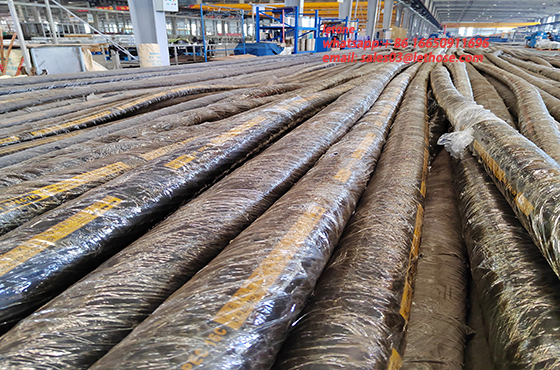
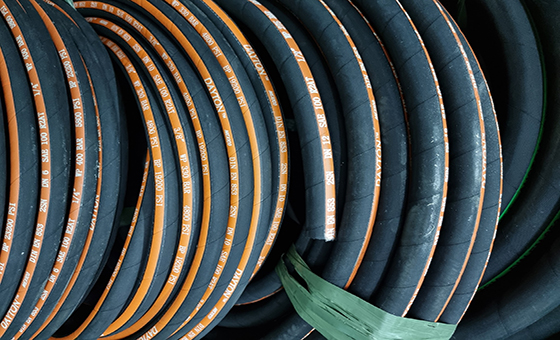
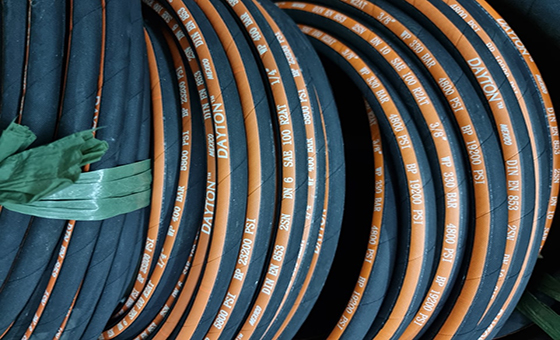
In oil drilling engineering, kicks and blowouts are the Sword of Damocles hanging over every wellhead. When drill string circulation fails, when formation fluids enter the wellbore and create a kick, when high-pressure oil and gas surge toward the wellhead with devastating force — the only thing that can stabilize the situation under extreme conditions is the flexible hose within the choke and kill manifold system.
The API Spec. 16C Flexible Choke and Kill Line is the core flexible connection component of this system. And the word "armored" gives it the hard power to survive in extreme environments — deep sea, polar regions, deserts, and beyond.
API Spec. 16C "Choke and Kill System Specification" is the internationally recognized performance qualification standard for choke and kill hoses in the petroleum industry, also implemented alongside SY/T 5323 and other industry codes. The standard classifies hoses into four flexibility levels: FSL 0 / FSL 1 / FSL 2 / FSL 3, with FSL 3 being the highest flexibility grade, designed for complex applications such as drilling platforms, semi-submersible rigs, or drillships where relative motion and installation dimension changes occur.

Products must also comply with NACE MR0175 / ISO 15156 (anti-H₂S standard). Fitting materials strictly follow these requirements to ensure no sulfide stress cracking (SSC) occurs in H₂S-containing environments.
Core Performance Parameters:
| Parameter | Value Range |
|---|---|
| Operating Temperature | -29°C ~ +121°C (-20°F ~ +250°F) |
| Flexibility Level | FSL 0 / 1 / 2 / 3 |
| Max. Production Length | 70 ~ 100 m |
| Length Tolerance | ≤6.4m ±64mm; >6.4m ±1% |
| Fire Resistance | Withstand +704°C open flame for 30 min, no leakage |
| Fitting Type | Integral Union / Integral Flange (API Spec 6A) |
A qualified armored API 16C flexible choke & kill line contains at least six functional layers from inside to outside — each one indispensable:
| Layer | Material | Function |
|---|---|---|
| ① Inner Sealing Layer | UPE / PTFE (Engineering Plastics) | Chemical inert barrier; anti-corrosion, anti-permeation |
| ② Inner Rubber Seal Layer | HNBR (Hydrogenated Nitrile Butadiene Rubber) | Anti-H₂S, oil-resistant, corrosion-resistant, high-temp, gas-impermeable |
| ③ Inner Buffer / Outer Protective Layer | High-strength fabric | Absorbs impact, protects inner rubber layer |
| ④ Pressure-Bearing Skeleton | High-strength steel wire rope (2–6 spiral layers) | Core pressure bearing; ensures burst pressure safety |
| ⑤ Flame-Retardant Insulation Layer | Glass fiber cloth | Fire & heat insulation; first line of defense |
| ⑥ Outer Armor Layer | Stainless steel armor / stainless steel wire / PE spiral sheath | Anti-mechanical damage, anti-crush, marine corrosion resistant |
| ⑦ Outer Rubber Layer | Chloroprene synthetic rubber | Flame-retardant, wear-resistant, oil-resistant, ozone & UV resistant |
The armor is the "war armor" of this hose. In deepwater operations, the line may withstand thousands of meters of external water column pressure. On land, it must resist falling object impacts and abrasion. The stainless steel armor neutralizes all these threats — without sacrificing the flexibility that defines FSL 3.
When drill string circulation is lost, the choke & kill line pumps heavy mud or kill fluid into the wellbore, maintaining bottom-hole pressure balance and preventing uncontrolled formation fluid influx.
When formation fluids enter the wellbore and a kick occurs, the choke valve is adjusted to apply precise back-pressure to the formation, while the bleed valve directs overflow out — achieving soft shut-in. This avoids the excessive pressure shock of hard shut-in on weak formations and prevents water hammer effects.
With the dual protection of inner HNBR + PTFE layers, the hose safely transports H₂S-containing oil/gas mixtures, acidizing fluids, oil-based/water-based/foam kill fluids, and other hazardous media — across temperatures from -29°C to +121°C.
API 16C flexible choke & kill lines cover the full pressure range from 5,000 psi to 20,000 psi (≈ 35 MPa ~ 140 MPa):
| Pressure Class | ID (in) | OD (mm) | Working Pressure (psi) | Test Pressure (psi) | Burst Pressure (psi) | Min. Bend Radius (mm) |
|---|---|---|---|---|---|---|
| 5,000 | 2~5 | 95~193 | 5,000 | 7,500 | 11,250 | 1,000~1,800 |
| 7,500 | 2~5 | 97~210 | 7,500 | 11,250 | 16,875 | 1,000~1,800 |
| 10,000 | 2~5 | 105~210 | 10,000 | 15,000 | 22,500 | 1,200~1,800 |
| 15,000 | 2~3 | 123~154 | 15,000 | 22,500 | 33,750 | 1,400~1,600 |
Note: Data shown is for Grade A (smaller ID). Grades B & C have progressively larger IDs and higher pressure capacity.
Current API 16C flexible choke & kill line technology is evolving along three major trends:
| Trend | Description |
|---|---|
| Ultra-High Pressure | Working pressure now reaches 20,000 psi (≈ 140 MPa), designed for deepwater ultra-deep wells |
| Intelligent Control | Smart choke & kill manifolds share data with the driller's console, reducing cabling and enabling remote control |
| Environmental Adaptation | Patented insulated housing manifold systems for polar/desert environments with extreme temperature swings; erosion-resistant designs extend service life significantly |
Additionally, hoses can be customized with electric heat tracing and external protective layers including stainless steel armor, stainless steel wire, or polyethylene spiral sheath as required.