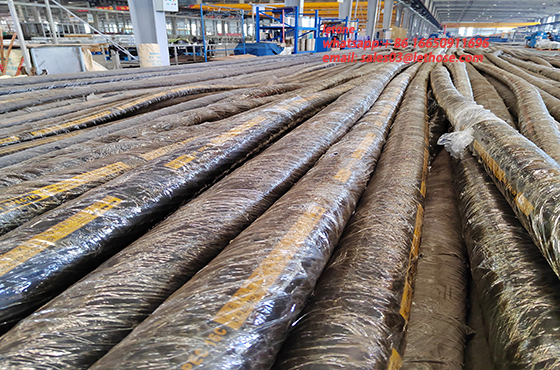
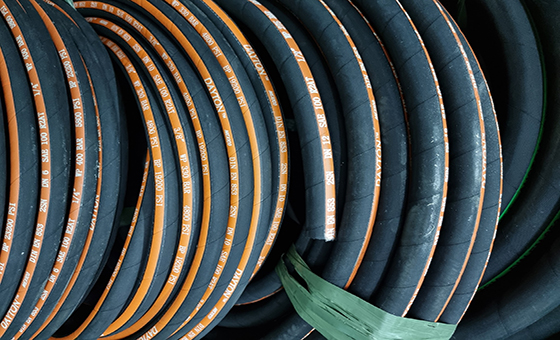
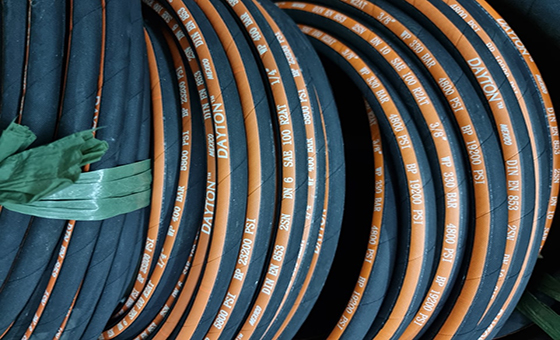
In the fields of oil drilling, geological exploration, and high-pressure fluid transportation, high-pressure mud hoses are core components of critical equipment, and their performance directly affects operational safety and efficiency. The 2-inch 15000psi (approximately 103.4MPa) 7K high-pressure mud hose, with its superior pressure resistance, wear resistance, and environmental adaptability, has become the preferred solution for extreme conditions such as deep well drilling and shale gas extraction. This article, written by LETONE Technology, will analyze the hose from multiple dimensions, including technical parameters, application scenarios, key selection points, and market status, providing a comprehensive reference for industry users.
I. Core Technical Parameter Analysis
Taking the LETONE Technology LT301-C high-pressure hose as an example, similar 2-inch 15000psi hoses typically employ a four-layer reinforced structure: an inner polyurethane or nitrile rubber lining provides chemical corrosion protection, a middle double-layer steel wire braided layer achieves pressure bearing (single-layer tensile strength can reach 2000MPa), and an outer wear-resistant synthetic rubber layer resists external impacts. A 7K temperature rating means it can operate continuously in environments ranging from -46℃ to 121℃, with a burst pressure exceeding four times the working pressure. Interfaces primarily utilize API 7K standard flanges or quick couplings to ensure seamless connection with drilling rigs.
Notably, LETONE Technology's rotary vibratory drilling hoses feature a specially reinforced anti-kink design, capable of withstanding 15,000 psi pressure while accommodating radial vibrations of over 200 revolutions per minute in the drill pipe. This dynamic performance is particularly crucial for shale gas horizontal well operations. Some high-end models incorporate armored ultra-high pressure fire-resistant hoses, further enhancing their fire resistance to over 700℃ through the addition of a ceramic particle coating.
II. In-depth Analysis of Typical Application Scenarios
1. Deep Well Drilling Operations: In ultra-deep wells exceeding 5000 meters, mud pumps need to generate pressures exceeding 100 MPa to maintain wellbore stability. The 2-inch hose, as the "last mile" connection in the pumping system, requires a pulse fatigue life exceeding 500,000 cycles. Case studies provided by suppliers on the 1688 platform show that a project in the Tarim Oilfield used hoses with a double-layer steel wire spiral structure, which remained leak-free after 300 hours of continuous operation.
2. Offshore Drilling Platforms: The salt spray environment places special requirements on the outer layer of the hose. Some products, such as the "marine-grade hoses" mentioned in Baidu News, use a neoprene rubber outer layer with an internal anodic protection layer, achieving a 5-year replacement-free record in the North Sea Oilfield. Their floating flange design also compensates for pipeline stress caused by platform displacement.
3. Fracturing Truck Connection: In shale gas fracturing operations, multiple 2000-type fracturing trucks need to be connected in parallel via high-pressure hoses. The 2-inch specification meets the requirements for large displacement (maximum flow rate up to 1.2 m³/min) and facilitates pipe laying in narrow well sites. The hydrogen sulfide-resistant hoses provided by LETONE supplier maintained stable performance even in the Sichuan shale gas field environment with H₂S concentrations reaching 200 ppm.
III. Six Key Indicators for Purchasing Decisions
1. Certification System: API 7K and ISO 14693 certifications are basic requirements; deep-sea applications also require DNV GL certification. A Shaanxi manufacturer disclosed on Baidu's AiCaiGou page that its products have passed the 200,000-cycle pulse test by Det Norske Veritas (DNV).
2. Materials and Manufacturing Process: The inner layer uses hydrogenated nitrile butadiene rubber (HNBR), which has a lifespan three times longer than ordinary NBR. Comparative tests provided by LETONE Technology show that in mud with a sand content of 15%, the HNBR hose has a lifespan of 1200 hours, while the ordinary model only lasts 400 hours.
3. Safety Factor: It is recommended to choose products with a burst pressure ≥ 4 times the working pressure. Data from Lotte Fluid's official website shows that its LT301-C model has a measured burst pressure of 65,000 psi, far exceeding industry standards.
4. Flexibility Index: High-quality hoses maintain a bending radius of 0.8m under 15,000 psi pressure, which is crucial for the mobile pipelines of truck-mounted drilling rigs. A user in Xinjiang reported that insufficiently flexible hoses caused premature cracking at the pump truck joints.
5. Supporting Services: These include on-site pressure testing guidance and emergency replacement support. LETONE supplier Shandong Aotai provides 48-hour global emergency delivery service, with a successful case in a copper mine project in Africa.
6. Total Life Cycle Cost: The initial purchase price of high-end products may be 30% higher, but as analyzed in a Baidu News case, a certain Yanchang Oilfield project found that using imported hoses resulted in a 17% lower annual cost per meter compared to domestically produced low-end products.
IV. Practical Recommendations for Use and Maintenance
Installation Mistakes Warning: Twisted installation is a common cause of failure. It is recommended to mark the center line during installation, and the twisting angle should not exceed 5°.
Pressure Testing Standards: New pipes must undergo a stepped pressure test (25%-50%-75%-100%) before use, maintaining each pressure level for 15 minutes. A pipe burst accident occurred in an Ordos project due to skipping this step.
Storage Points: Keep away from ozone sources (such as electric motors). Re-testing is required if the stock exceeds 6 months. Lotte Fluid Technology Manual recommends using a suspension storage method to avoid deformation of the adhesive layer under pressure.
Currently, the domestic market is polarized: on the one hand, manufacturers in Jiangsu and Shandong provinces can produce products that meet API standards, at prices 40% lower than imports; on the other hand, international brands such as Schlumberger still monopolize the high-end market above 15,000 psi. Users are advised to choose based on specific operating conditions—for conventional onshore drilling, priority should be given to high-quality domestic products, while polar or deep-sea operations still require imported solutions. With breakthroughs in materials science by domestic manufacturers during the 14th Five-Year Plan period, the localization rate of high-pressure hoses is expected to increase from the current 45% to over 70% between 2026 and 2030.